
How to Film Decorated Sablés Without Slowing Down Your Work
Home Bakery & Cake Decorating · CraftToCamera
Prepare the camera before decorating, record one clear action, then show the finished sablés separately.
The piping is going well, the sablés are nearly ready, and then you notice your wrist has hidden the whole action from the camera. That’s frustrating, but the fix usually belongs before the next take: a short rehearsal from the angle you plan to use.
I’d choose one decorating action and prepare the phone before starting it. Afterward, the finished sablé gets its own clean view, followed by the group or packaging. This way you can show the work without turning every piece in the batch into a filming task. Let’s make the camera fit around your decorating, rather than interrupting it.
Choose a decorating moment that belongs in the video
Start with one action that is easy to recognize. You could film an outline, a short section of piping, placing a decoration or lifting a completed sablé into its presentation box. Choose a normal part of your workflow rather than an elaborate extra action invented just for the camera.
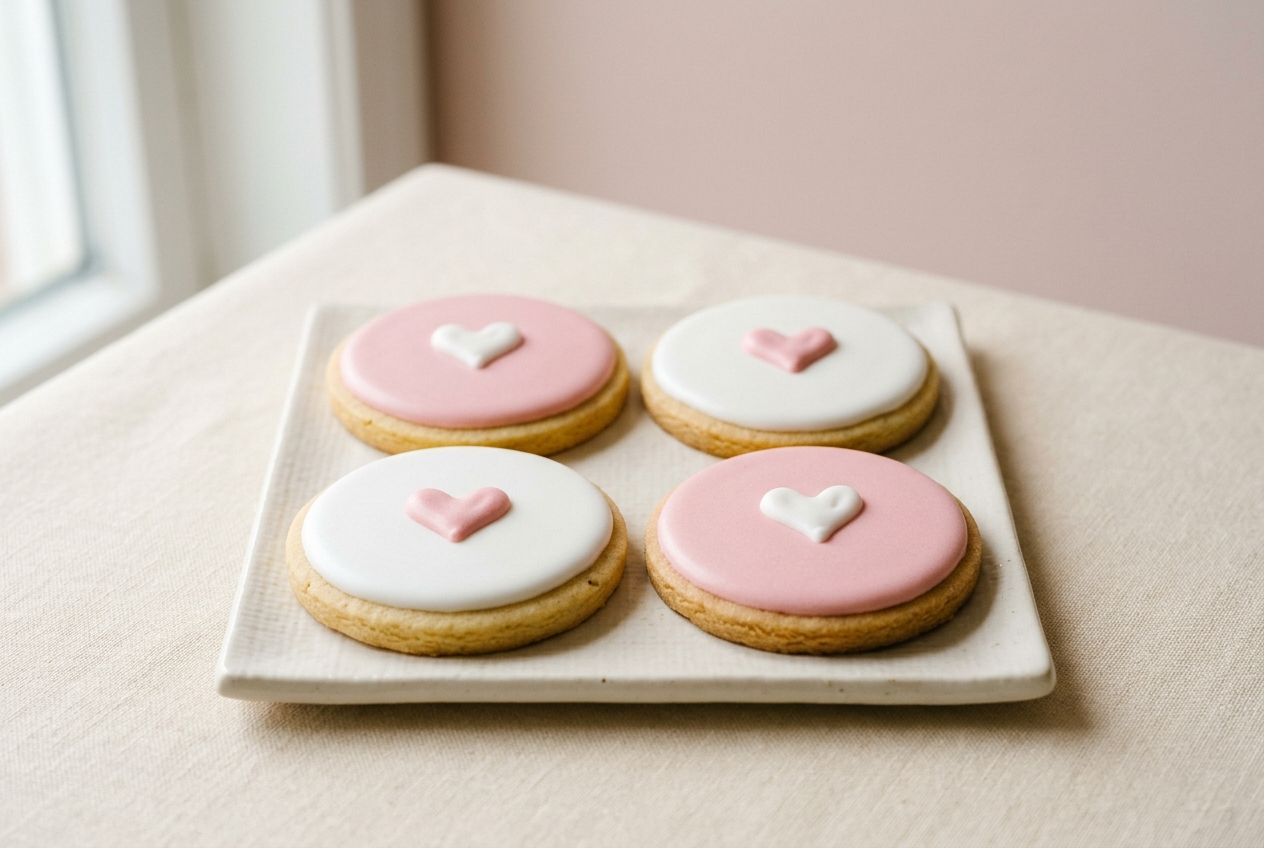
Think about the final design. A pink sablé with a white heart needs a view that separates the heart from its background. Raised piping needs an angle that shows height. A collection with alternating colors needs a group view where both versions can be compared. The best action is the one that leads naturally to the finished feature you want to show.
Do not plan to record the entire batch unless you have a reason to keep that much footage. One representative action can explain the process. Write a short list before starting: the action, the finished detail, the group and the packaging. That list gives you an ending point so filming does not expand into every part of the working day.
Prepare the filming area before handling the food
Choose a small, clean area with enough room for the real task. The camera support should remain outside the working path and should not force you to reach awkwardly around it. Check that nothing can fall into the food area. Treat the filming setup as part of the workspace rather than a decoration that can be balanced wherever there is a gap.
Keep only the tools involved in the action within the frame. A piping bag, a suitable work surface and one sablé can be enough. Extra bowls, cloths, packaging and decorations may make the table look active while obscuring the action. Move them to a nearby place where they remain accessible without entering every clip.
Record a short rehearsal before beginning the real decorating movement. You can check the position with an empty hand or another appropriate practice arrangement. Look for a wrist blocking the design, a piping bag covering the tip, or a shadow falling over the exact area the viewer needs to see. Solve those issues while the task can still wait.
Pick overhead or angled views for different details
An overhead view makes a flat design easy to follow. It can show an outline or the relationship between a heart and its surrounding color. Keep the phone approximately parallel to the surface so the sablé does not look stretched on one side. Frame the complete shape with enough room for your working hand.
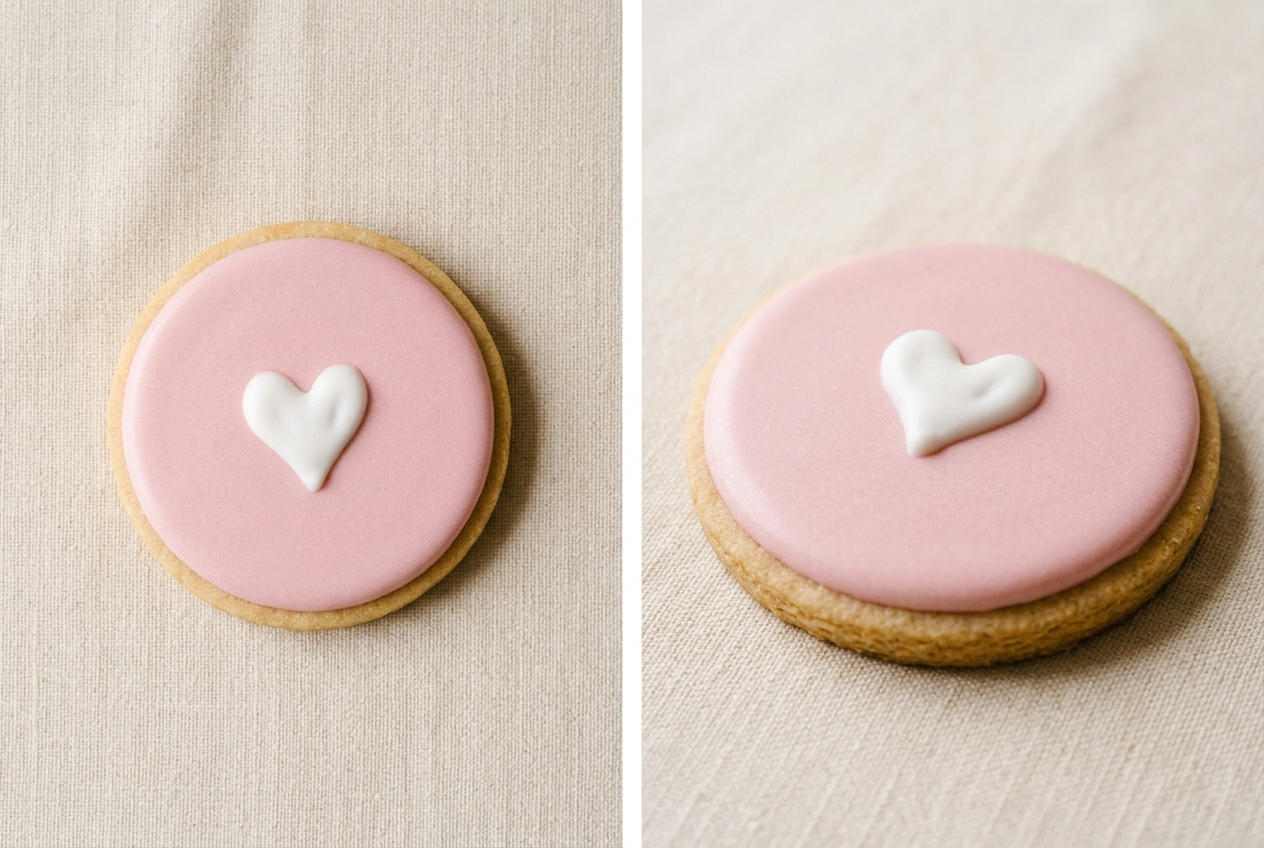
A slightly lower, angled view can explain raised decoration, thickness or the moment a finished sablé is placed down. It may be less useful for following a full outline if the near edge blocks the far side. Choose the angle according to the information, not because one viewpoint is always more professional.
You can combine both without building two elaborate setups. Capture the decorating action from the position that keeps the tip visible. After the decoration is ready to be moved according to your own process, record a separate finished detail from a lower angle. The second clip explains the result instead of asking the process view to reveal everything.
Protect pale decoration from bright, flat light
White details can disappear against very pale surfaces. Start with a quiet background in a slightly different tone and use soft light from the side. Look at the white heart or piping through the camera. You should be able to see its outline and, where relevant, its raised shape.
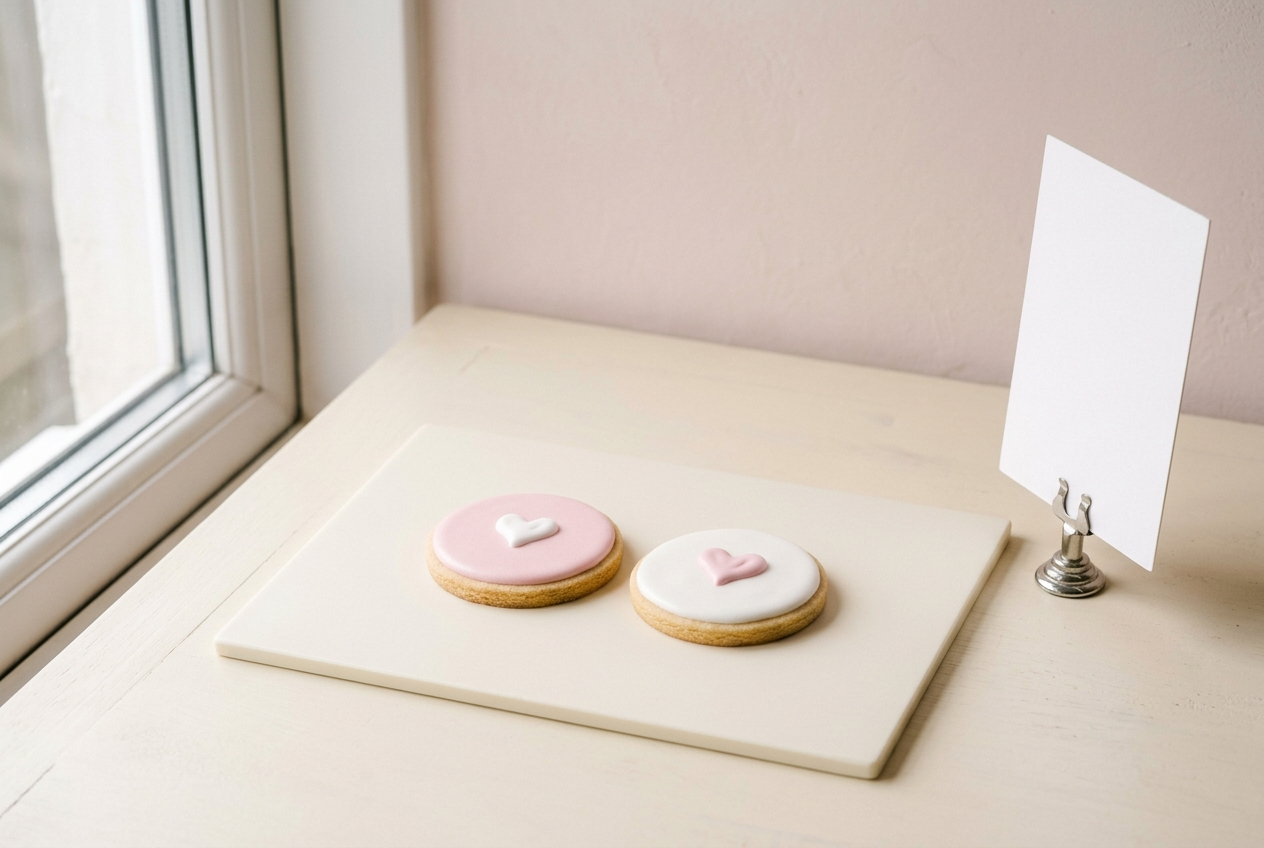
If a bright window creates a hard patch or a distracting shadow, change the position of the surface before increasing editing adjustments. A small rotation can make the decoration more readable. If the opposite side is too dark, a white card outside the food area can gently lift the shadow. Keep it stable and clear of the work.
Check color consistency between the pink decoration, the white details and the packaging. Strongly warm room light mixed with daylight can make those colors shift across the frame. Choose one consistent lighting arrangement when possible. The final video should show the colors of the actual sablés, rather than a filter that changes the design into a different palette.
Record the action once, then give the result its own clip
Start recording before the important movement begins so you have a small margin for trimming. Complete the normal action, move your hand away, and allow a brief clear view of the result. That pause is useful: without it, viewers may see the piping bag and then an immediate cut without ever seeing what it created.
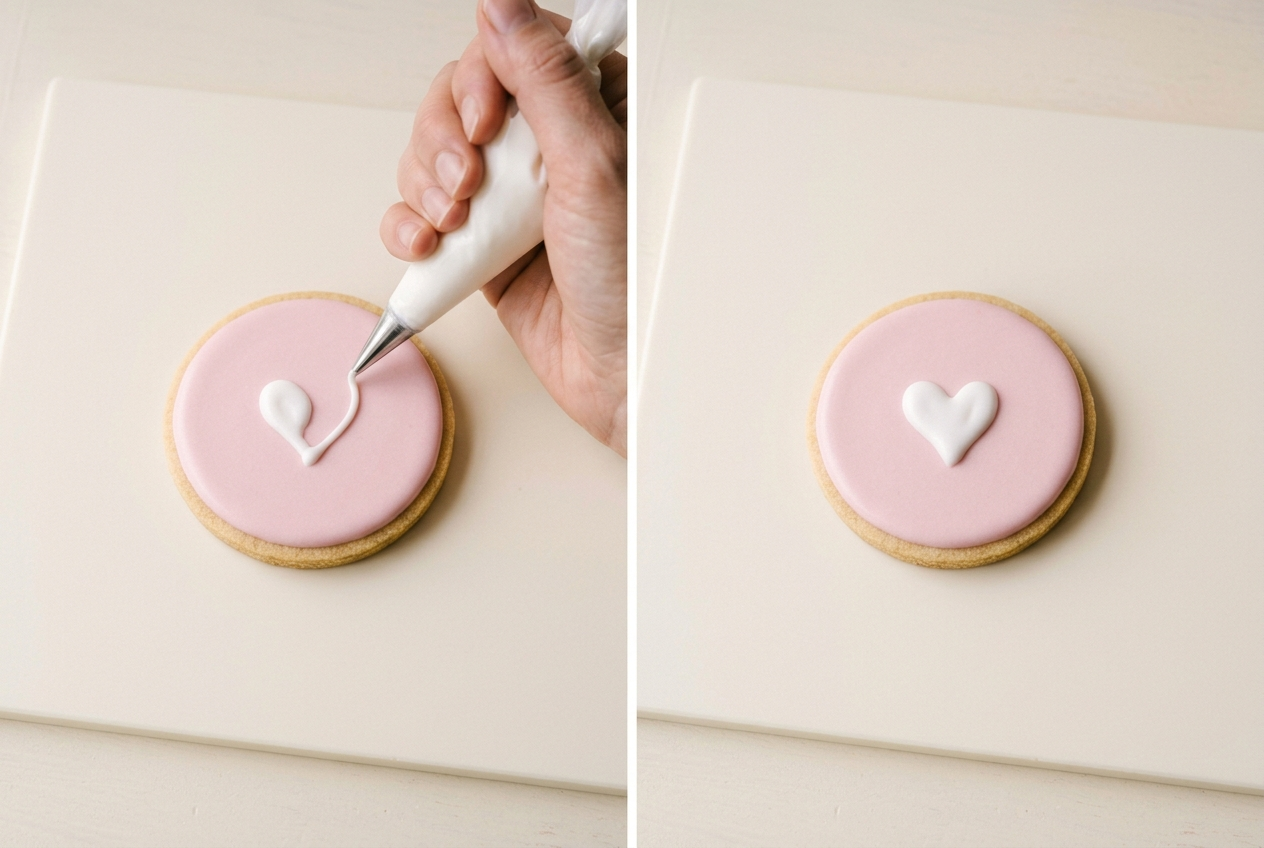
Do not repeat a delicate decorating action just because the first camera movement was imperfect. If the process clip is usable, keep it. If it is not, you can explain the finished feature with a clean detail and film another normal action on the next suitable piece. Content should respect the actual work rather than requiring unnecessary handling.
For the finished view, choose a decorated sablé that represents the order. Show its complete outline, then a detail of the feature that matters. If your products are sold decorated, present the finished decorated version as the product result. Undecorated stages belong in the process story and should not be confused with what the customer will receive.
The light and angle checks used in bakery photography tutorials can double as your video test: capture one still frame to check that the pale icing and raised heart remain distinct before recording.
Show the collection and packaging accurately
A group image can communicate the theme of an order, but it also makes a claim about quantities and combinations. Arrange the actual set or clearly identify the arrangement as an example. Keep the colors and designs visible enough that someone can understand what varies within the collection.
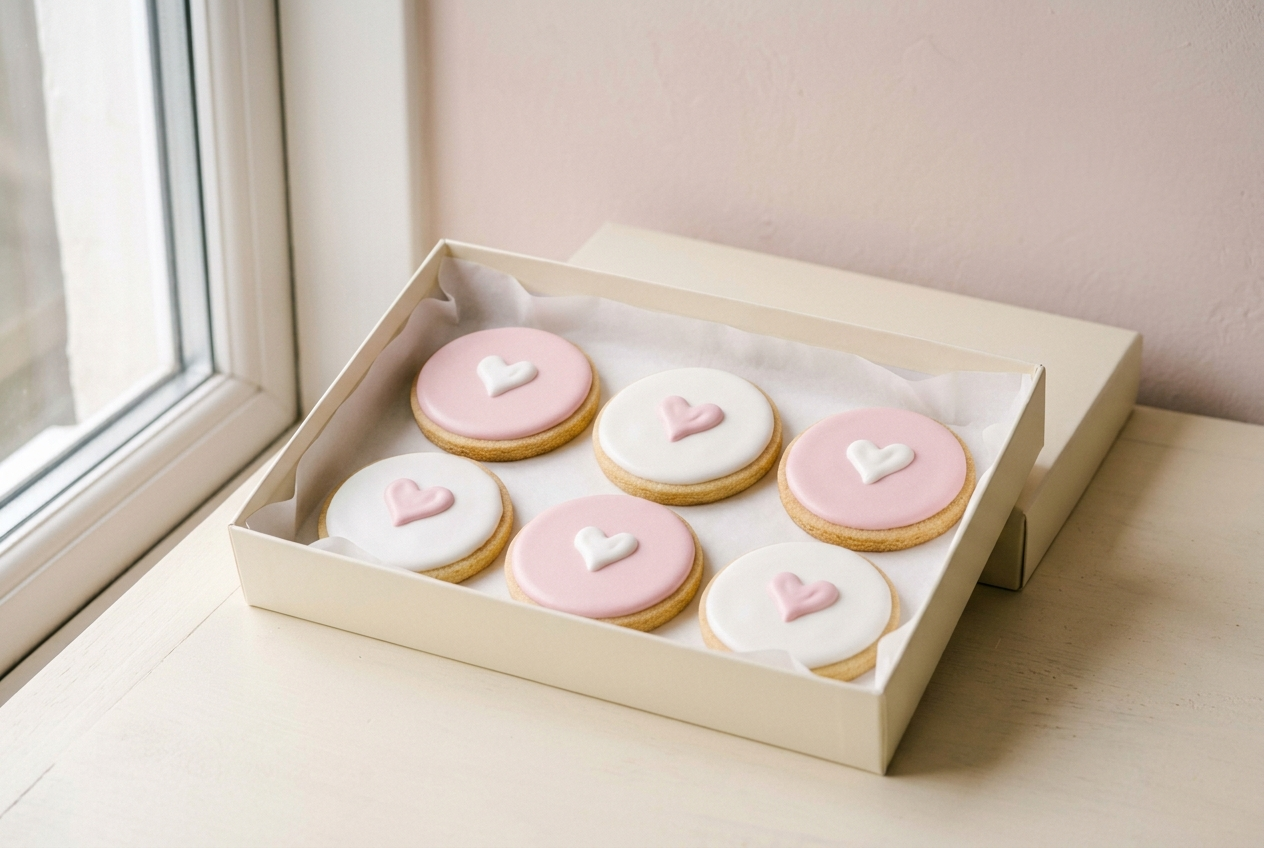
Use a complete box view when the presentation is part of the product’s appeal. Then add a short placing or closing action if it contributes to the video. Avoid covering most of the decorated tops with a lid, ribbon or a large caption before the viewer has seen them. The packaging should frame the work rather than hide it.
Photograph the final arrangement as well as filming it. A clear still can be useful for a product page or an accompanying post, and it takes little extra preparation while the presentation is already ready. Keep decorative props separate from the included items in the description so the customer understands exactly what belongs to the order.
Mistakes that interrupt the workflow or hide the design
Starting the camera after the action begins. Prepare the framing and support beforehand. If the action is brief, a few seconds of empty footage at the start are easier to trim than a missing beginning is to recreate.
Filming only your wrist or the back of the piping bag. Rehearse the movement through the phone. Change the camera position or your approach so the working tip and the developing design remain visible without changing your comfortable technique.
Using unfinished pieces as the final product view. A process stage is useful when its role is clear. Finish the sequence with decorated sablés that represent what you sell, including the actual color treatment and details.
Making white icing completely featureless. Check the lightest decoration before exporting. If the outline or raised detail disappears, reduce the brightness of the capture or change the light. Darkening an already featureless area later cannot recreate missing detail reliably.
Edit for a readable decorating sequence
Remove long pauses, but keep the movement understandable. A very fast edit may create energy while making the technique impossible to see. Choose whether the clip is introducing the product or explaining one decorating moment, then adjust the pace to that purpose.
Place text where there is open background. A short phrase naming the design or the decorating step can support the image. Avoid covering the piping tip while asking the viewer to watch it. Preview without sound first: the action and finished result should still make sense before music or narration is added.
Save a few notes for the next session: which angle kept your hand clear, which background separated the white decoration, and which stage was easiest to capture. That record is more useful than collecting a large folder of clips with no explanation of what worked.
Frequently asked questions
Do I need to film a complete batch?
No. One clear decorating moment and several finished views can communicate the process. Record only the actions that serve the video you have planned, especially when filming would otherwise slow down the order.
Which view is better for piping a heart?
An overhead view often explains the flat outline, while an angled view can show raised piping. Test where your hand and bag sit. The useful choice is the angle that leaves the developing design visible.
Can I use a process clip recorded on another day?
Yes, when it accurately represents the work and product being described. Avoid combining footage in a way that suggests a different design, color or order was made through the process shown.
How do I stop pink decoration looking orange?
Check the light first, particularly warm lamps mixed with daylight. Compare the recording with the actual sablé and make restrained color corrections. Avoid a strong warm filter across the whole sequence.
What if I missed the most satisfying part?
Build the video around the footage you have: the finished detail, collection and packing can still tell a useful story. Note the missed action and prepare for it during the next normal decorating session.
Make the next bakery video easier to plan
Choose one design and one decorating action before you prepare the phone. Capture a clear result, then a group or packaging view. You will have a manageable story without making filming the main task of the day.
The CraftToCamera Home Bakery Content Kit on Etsy brings together filming ideas and planning resources for bakery content. Use the relevant sequence to organize your decorated sablé session, then adapt it to your own designs and working process. Check the listing for the full current contents.